
Decorative Surfaces Designed for Outdoor Exposure
Stamped Concrete and Overlays in Texarkana for patios, walkways, and pool decks needing visual upgrade or surface repair
Worn concrete patios and pool decks lose their finished appearance as surface layers erode, stains set in, and minor cracks spread. Stamped concrete and overlay applications from Pine Creek Pools and Outdoors provide a decorative finish layer that addresses surface damage while adding texture, pattern, and color unavailable in standard concrete pours. The process works for new construction and existing slabs that remain structurally sound but look dated or damaged at the surface level.
Stamped concrete uses specialized mats pressed into freshly poured concrete to create patterns resembling stone, brick, slate, or wood planks. Overlays involve applying a thin bonded layer of modified concrete over existing surfaces, then stamping or texturing that layer before it cures. Both methods allow color customization through integral pigments or topical stains, and sealed finishes protect against UV fading, moisture penetration, and the temperature extremes that characterize Texarkana summers and occasional winter freezes.
Request a decorative concrete estimate to review pattern samples and discuss which application method fits your project scope.
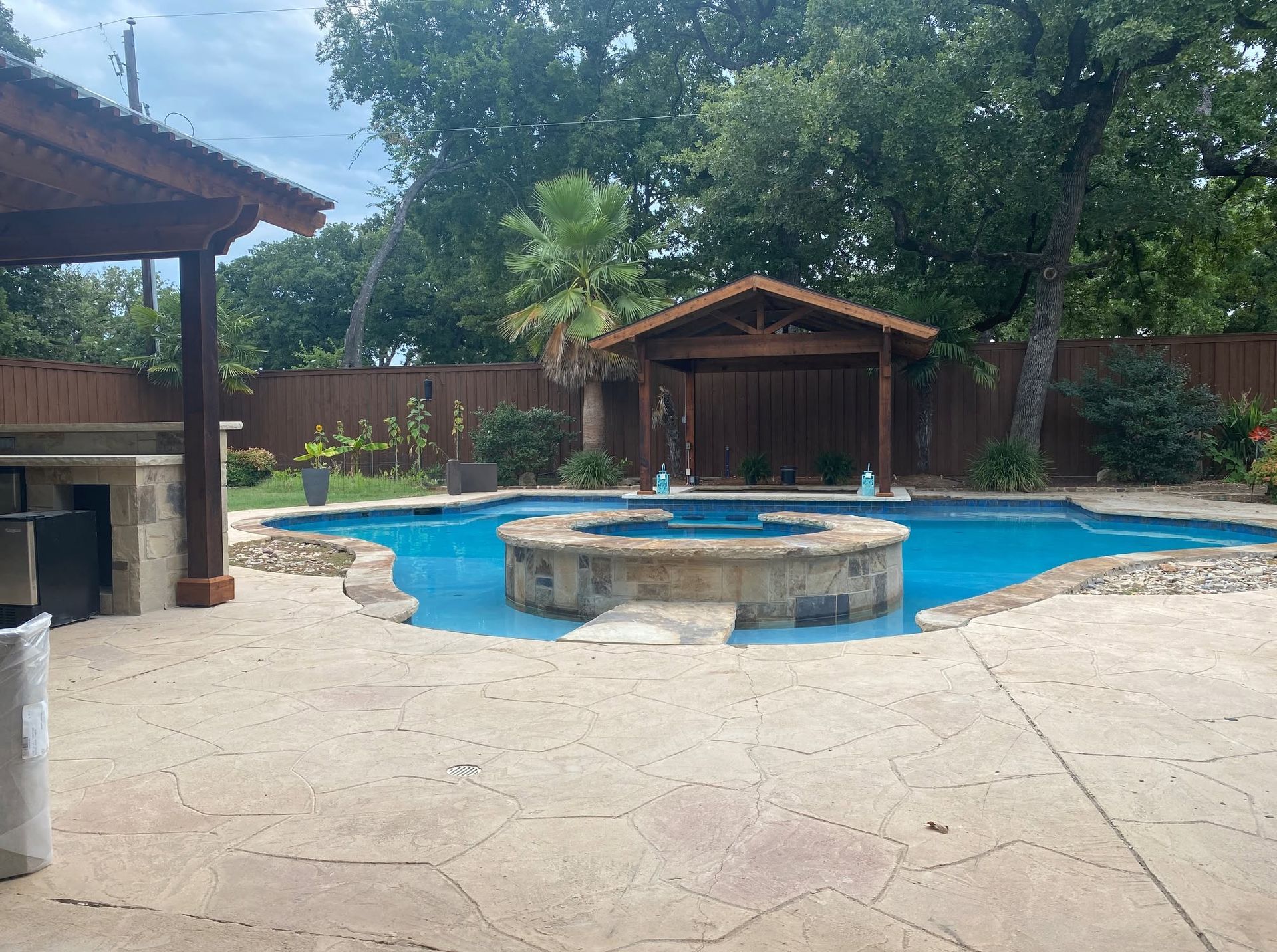
What Separates Durable Decorative Concrete from Premature Failure
Installation quality hinges on surface preparation and timing precision during application. For overlays, the existing concrete must be clean, profiled through grinding or acid etching to create mechanical bond, and primed with a bonding agent that chemically links the old surface to the new layer. Stamping new concrete requires coordinating color release agents, stamp pattern alignment, and working within the narrow window when concrete is firm enough to hold an impression but soft enough not to stick to the mats. Humidity and temperature affect this window significantly, sometimes limiting work to early morning hours during July and August.
After installation cures and sealing completes, you'll notice that the patio or deck has uniform color and defined pattern with visual depth that mimics natural materials. Sealed surfaces shed water quickly, which prevents the pooling that leads to algae growth in textured areas. The finish resists hot tire pickup on driveways, doesn't splinter or rot like wood decking, and won't shift or settle like pavers can when base materials erode. Color remains consistent across the surface rather than showing the blotchy fading that happens with some topical coatings.
Projects include surface preparation, crack repair if needed, overlay or stamped concrete application, color integration, and sealer application. This service does not typically include major slab replacement, subsurface drainage correction, or removal of tree roots affecting the concrete, though those issues get identified during the estimate process. Longevity depends on resealing every two to four years and avoiding deicing chemicals during rare freeze events, as salt accelerates surface degradation even on sealed concrete.
Answers to Frequent Service Questions
Property owners considering decorative concrete usually ask about these practical aspects before committing to the project.
What's the difference in cost between overlays and full-depth stamped concrete?
Overlays cost less because they use existing slabs as the base and require less material, but they only work if the underlying concrete is stable and relatively level. New stamped concrete costs more due to excavation, base preparation, and material volume, but it allows correcting drainage issues and significant level changes simultaneously.
How do stamped patterns hold up to furniture, grills, and regular use?
Properly installed and sealed stamped concrete is as durable as standard concrete for load-bearing purposes. The pattern is impressed into the surface, not applied on top, so it won't wear off. High-traffic areas may show slight texture smoothing over many years, but the pattern remains visible and functional.
Why do some decorative concrete installations flake or delaminate within a few seasons?
Delamination happens when overlays are applied over dirty, oily, or smooth surfaces without proper profiling and bonding agents. It also occurs if the overlay is applied too thick without adequate reinforcement, or if moisture vapor from below pushes upward through concrete that wasn't properly sealed during installation.
What pattern and color combinations work best in Texarkana's climate and typical home styles?
Slate and irregular stone patterns in earth tones blend well with traditional brick homes common in the area, while wood plank patterns suit ranch-style properties. Lighter colors reflect heat better around pools, though they may show pollen staining more readily during spring unless sealed with stain-resistant products.
How long before the surface can handle foot traffic and furniture placement?
Light foot traffic is usually safe after 24 hours, but full cure takes seven days. Wait at least three days before placing furniture, and avoid dragging heavy items across the surface during the first week to prevent scuffing the finish before it fully hardens.
Pine Creek Pools and Outdoors handles decorative concrete projects by evaluating the existing surface condition, recommending appropriate methods and finishes, and managing installation timing to account for weather conditions. Arrange an estimate appointment to see pattern samples and get project-specific recommendations for your outdoor space.